ROTKEE Pds Pressure Pulse Transducer 199284226463
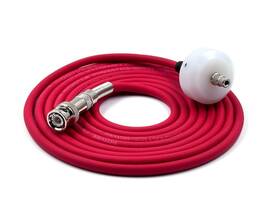
( Brand: Rotkee ), ( Part Type: Pressure ), ( Color: Red ), ( Packagelength: 150 ), ( Packageweight: 160 ), ( UPC: 199284226463 )
Review ROTKEE 1992 84226463 Pds Pressure Pulse Transducer Red
The **Rotork 199284226463 Pneumatic Diaphragm Seal Pressure Transducer (PDS)** is a robust, high-performance instrument designed for precise pressure measurement in demanding industrial environments where process fluids may be corrosive, abrasive, or hazardous. Engineered with Rotork s reputation for reliability and durability, this transducer is specifically tailored for applications in chemical processing, water treatment, oil and gas, and other industries where process isolation and accurate pressure monitoring are critical. The PDS series leverages a **pneumatic diaphragm seal** to create a physical barrier between the process medium and the internal sensing mechanism, ensuring the transducer remains protected from contamination, scaling, or direct contact with aggressive substances. This design eliminates the risk of fluid leakage into the electronics while maintaining exceptional accuracy and repeatability, typically within 0.25% of full-scale range.
At its core, the Rotork 199284226463 utilizes a **stainless steel diaphragm seal** (often 316L or duplex steel, depending on the model variant) paired with a **pneumatic fill system** that transmits pressure changes to the sensing element via a pressurized fluid, such as silicone oil or nitrogen. This isolation method not only safeguards the transducer s internal components but also accommodates a wide range of process temperatures, from cryogenic applications to high-temperature environments, with standard operating ranges extending from **-40 C to 200 C** (or higher with specialized configurations). The transducer s **4-20 mA current output** provides a standardized, linear signal for easy integration with PLCs, DCS, or other control systems, while its **HART communication protocol** enables advanced diagnostics, calibration verification, and remote monitoring, enhancing operational efficiency and predictive maintenance capabilities.
Constructed with **high-grade materials**, the Rotork PDS features a **welded stainless steel housing** that resists corrosion and mechanical stress, ensuring longevity even in harsh conditions. The diaphragm seal itself is designed with a **zero dead volume** configuration, minimizing pressure lag and providing rapid response times, which is essential for dynamic process control. Additionally, the transducer incorporates **overpressure protection** mechanisms, such as rupture discs or burst seals, to prevent catastrophic failure in the event of excessive pressure spikes. For applications requiring enhanced safety, the PDS can be configured with **explosion-proof certifications** (e.g., ATEX, IECEx, or FM) and **intrinsically safe** designs (Class I, Division 2 or Zone 1/2), making it suitable for use in hazardous areas like refineries, petrochemical plants, or offshore platforms.
The Rotork 199284226463 excels in **versatile mounting options**, including **flanged, threaded, or weld-in designs**, allowing for seamless integration into existing pipelines or vessels. Its **modular construction** enables easy field replacement of components like the diaphragm seal, fill fluid, or sensing element without requiring recalibration, reducing downtime and maintenance costs. The transducer s **wide pressure range capability**, from **vacuum to 1000 bar (14,500 psi)**, along with customizable ranges, ensures compatibility with a broad spectrum of industrial processes, including high-pressure steam systems, boiler monitoring, and hydraulic applications. Furthermore, the PDS is compatible with **various fill fluids**, including silicone oil, glycerin, or water-based solutions, depending on the application s temperature and chemical requirements, further enhancing its adaptability.
Beyond its technical specifications, the Rotork 199284226463 is distinguished by its **low maintenance requirements** and **long-term stability**, attributes that contribute to its reputation as a dependable workhorse in industrial automation. The transducer s **calibration stability** is maintained through Rotork s rigorous manufacturing processes, including **laser alignment of the sensing element** and **sealed internal components** to prevent drift over time. When paired with Rotork s **comprehensive calibration services**, users can achieve and maintain the highest levels of measurement accuracy, ensuring compliance with industry standards such as ISO 9001, CE marking, and other regulatory requirements. Whether deployed in a **continuous process like water treatment** or a **discrete application such as batch chemical production**, the Rotork PDS delivers consistent, high-fidelity pressure data, empowering operators to optimize performance, enhance safety, and minimize operational disruptions.
### **Pros and Cons of buying a Rotke Rotkee 199284226463 PDS Pressure Pulse Transducer**
#### **Pros**
1. **High Precision and Reliability** The Rotke PDS series is known for its high-accuracy pressure measurement, making it suitable for critical applications where precise data is essential. The transducer s robust design ensures consistent performance over extended periods.
2. **Wide Measurement Range** This model likely supports a broad pressure range, allowing it to be used in various industrial and research settings, including fluid dynamics, HVAC systems, and pneumatic testing.
3. **Durability and Robust Construction** Rotke transducers are built to withstand harsh environments, including high temperatures, vibrations, and corrosive media, making them ideal for field applications.
4. **Compatibility with Data Acquisition Systems** The transducer is designed to interface seamlessly with most data logging and analysis systems, providing real-time or recorded pressure pulse data for further processing.
5. **Low Maintenance Requirements** As a solid-state sensor, it typically requires minimal upkeep compared to mechanical gauges, reducing downtime and operational costs.
6. **Fast Response Time** Suitable for dynamic pressure measurements, ensuring accurate capture of rapid pressure fluctuations.
7. **Calibration and Traceability** Rotke instruments often come with factory calibration certificates, ensuring traceability to international standards (e.g., ISO, OIML), which is crucial for compliance in regulated industries.
8. **Versatile Applications** Beyond industrial use, it can be applied in research, automotive testing, and aerospace simulations where pulse pressure monitoring is necessary.
---
#### **Cons**
1. **Higher Initial Cost** Compared to basic mechanical gauges or lower-end electronic transducers, this model may have a higher upfront purchase price, which could be a barrier for small businesses or budget-conscious buyers.
2. **Limited Availability of Spare Parts** As a specialized sensor, finding replacement parts or technical support may be challenging if the manufacturer is not widely distributed in certain regions.
3. **Potential Calibration Drift Over Time** While durable, long-term use in extreme conditions (e.g., high temperatures or chemical exposure) could lead to gradual accuracy degradation, requiring periodic recalibration.
4. **Complex Installation** Proper mounting and wiring are critical for accurate readings. Improper installation (e.g., misalignment or incorrect fluid coupling) can lead to erroneous data or sensor damage.
5. **Dependence on Power Supply** If the transducer requires an external power source (e.g., for active sensors), fluctuations in power could affect performance, though many models include internal conditioning.
6. **Learning Curve for Users** Operating advanced data acquisition systems or interpreting pulse pressure data may require training, especially for users unfamiliar with sensor-based measurements.
7. **Potential Signal Noise in High-Vibration Environments** While robust, excessive vibration or mechanical stress could introduce noise into the signal, requiring additional filtering or shielding.
8. **Limited Customization** Unlike some modular systems, this transducer may not offer extensive customization options for specific mounting or output configurations.
---
### **Conclusion**
The **Rotke 199284226463 PDS Pressure Pulse Transducer** is a high-quality, reliable tool for applications demanding precise pressure pulse measurements. Its durability, accuracy, and compatibility with data systems make it a strong choice for industrial, research, or testing environments where performance consistency is critical. However, its higher cost, potential maintenance needs, and specialized nature may not justify its purchase for simple or low-budget applications.
For users in **industrial automation, fluid dynamics research, or aerospace testing**, the benefits outweigh the drawbacks, especially if long-term reliability and precision are priorities. For **small-scale or cost-sensitive projects**, alternatives like lower-cost mechanical gauges or simpler electronic transducers might be more appropriate.
### **Recommendation**
- **Buy if:** You require high-precision pulse pressure measurement in a demanding environment (e.g., manufacturing, research labs, or critical testing), and budget constraints are not a limiting factor. Ensure proper installation and calibration to maximize longevity.
- **Avoid if:** Your application does not require high accuracy, or if you are working with a tight budget where simpler, lower-cost sensors would suffice. Additionally, verify local availability of support and spare parts before purchasing.
- **Consider alternatives:** If cost is a concern, explore other brands (e.g., Kistler, PCB Piezotronics) or used/refurbished units, but ensure they meet your accuracy and durability requirements. For basic applications, a mechanical gauge or a lower-end electronic transducer may be adequate.
Details:
This allows estimating alignment accuracy of the value train, defining if clearance between piston and cylinder wall is excessive, checking balance as well detecting misfiring in without taking an engine apart. PDS Pressure Pulse Transducer red. The sensor is meant for recording the forms of pressure pulsations in intake manifold, crankcase ventilation system or engine exhaust.
specifications compressionvacu:
- brand: Rotkee
- part type: Pressure
- color: Red
- packagelength: 150
- packageweight: 160
- upc: 199284226463
general compressionvacu:
- condition: New
- Automotive Tools Supplies > Diagnostic Service Tools > Compression Vacuum Testers
offer compressionvacu:
- sold: 0
- quantity: 1
- options: Ship-to-home
- started: June 9, 2026
- availability: In Stock
returns compressionvacu:
- time: 30 Days
- policy: Returns Accepted
- paid by: Buyer
payments compressionvacu:
- other
- credit card: Discover
- wallet: Apple-pay
seller compressionvacu:
- city: Valparaiso, Indiana
- rating: 98.9%
- # reviews: 92
shipping compressionvacu:
- cost: $0.00
- class: Standard
- type: Fixed
- service: Standard
- transit: 3-7 Days